
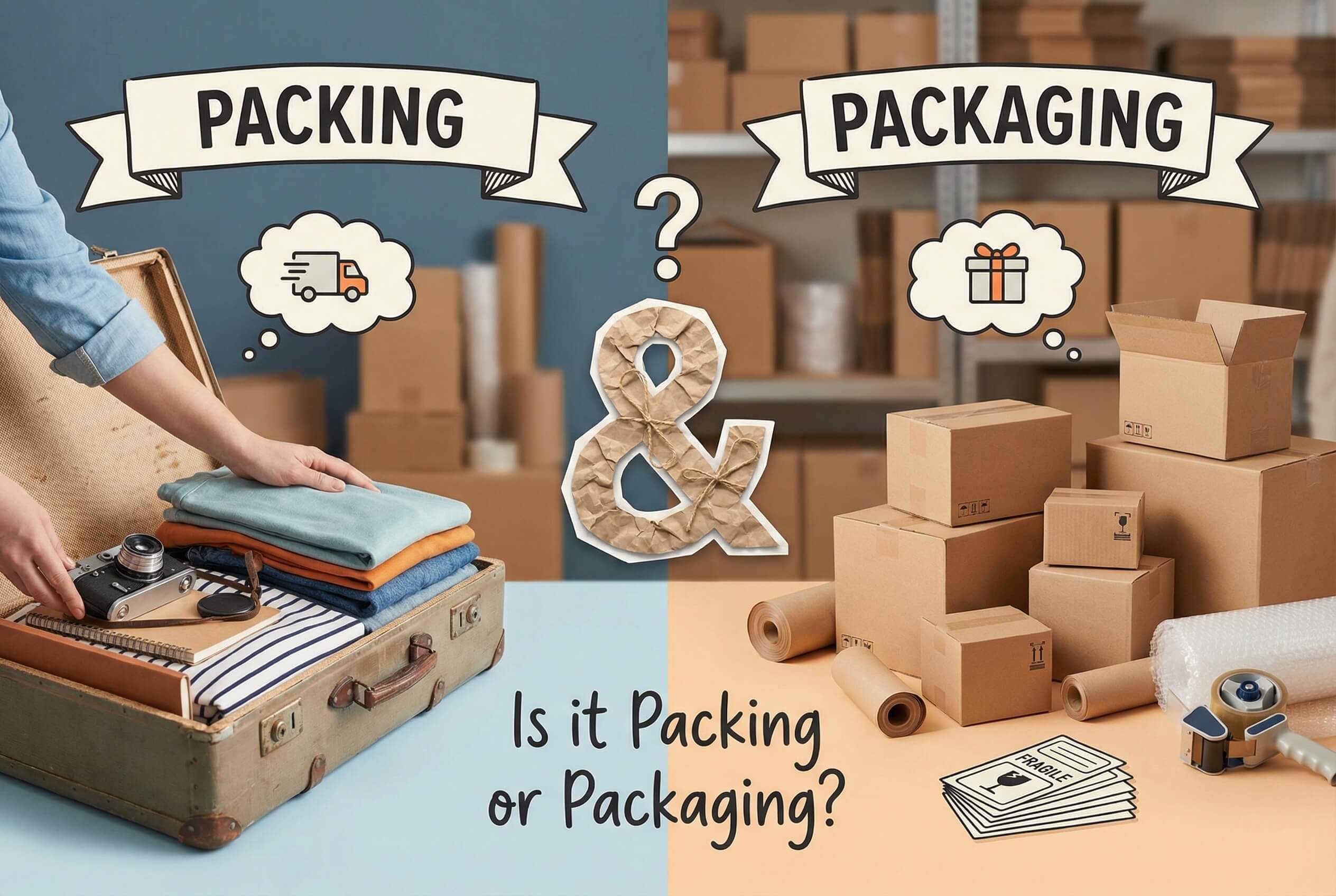
You’ve no doubt used both words countless times. Packing your boxes for shipping. Choosing packaging for your products. But are they the same thing? The short answer is no, and understanding the difference between the two words can save your business time, money, and most importantly, customer satisfaction headaches.
This article clears up any semantic confusion between packing and packaging once and for all. You’ll discover exactly when to use each term correctly, how they work together in your supply chain, and why both matter for protecting products and building your company’s brand. Whether you’re launching a new product line or improving your shipping process, knowing these distinctions will help you make more informed decisions.
What’s the Key Difference Between Packing and Packaging?
The main difference between packing and packaging comes down to purpose and timing. Packing refers to the process of securing items for transport. It’s the act of placing products inside containers with protective materials. Packaging refers to the materials and design that contain, protect, and present your product throughout its lifecycle.
Think of it this way: packaging is the box your product lives in. Packing is stuffing that box with bubble wrap and foam peanuts before shipping. Packaging stays with the product from manufacturing to customer. Packing happens right before items move from one location to another.
Both terms are often used interchangeably in casual conversation, which creates confusion. The packaging industry makes clear distinctions between these concepts because they serve different functions in the supply chain. Understanding the difference helps businesses communicate more precisely about their needs.
What Does Packing Mean in Business?
Packing means preparing goods for shipment or storage. The process of packing involves selecting appropriate packing materials, arranging items efficiently, and securing everything to prevent damage during transit. Packing focuses on protection and space optimization rather than visual appeal or branding.
Common packing items include bubble wrap, packing tape, foam inserts, and packing trays. These packing materials cushion products against impacts and vibrations. Efficient packing minimizes wasted space while maximizing protection. The purpose of packing centers entirely on ensuring products arrive intact.
Packing takes place in warehouses, fulfillment centers, and shipping departments. Workers use bubble wrap around fragile items. They fill empty spaces with protective materials. Packing ensures safe transit whether products travel across town or around the world. Packing in logistics plays a crucial role in reducing damage-related costs.
What Is Packaging and Why Does It Matter?
Packaging is the process of designing and creating the containers that hold products. It’s also the physical materials—boxes, bottles, pouches—that directly contain items. Packaging serves multiple purposes beyond simple protection. It identifies products, communicates brand values, and influences purchasing decisions.
Primary packaging makes direct contact with products. Think of the bottle holding your shampoo or the wrapper around chocolate bars. Secondary packaging groups multiple primary packages together, like the carton holding six bottles. Tertiary packaging handles bulk shipping of many secondary packages on pallets.
Good packaging protects the product while telling your brand story. Packaging design incorporates colors, graphics, and shapes that catch customer attention. Well-designed packaging creates memorable unboxing experiences. Packaging helps differentiate your products from competitors on crowded shelves.
Are Packing and Packaging Used Interchangeably?
Packing and packaging are two distinct concepts, yet people often use them interchangeably in everyday speech. This confusion is understandable because both involve containers and protection. However, using precise terminology matters when communicating with suppliers, logistics partners, and packaging manufacturers.
The packaging industry maintains clear distinctions. When you request “packaging,” suppliers understand you need designed containers for your products. When you need “packing materials,” they know you want protective fillers and shipping supplies. Using correct terms prevents miscommunication and ensures you receive what you actually need.
Packing and packaging may overlap in some contexts. Custom packaging boxes might require internal packing for extra protection. Jewelry packaging often includes foam inserts that serve packing functions. Understanding how these elements work together helps you create comprehensive product protection strategies.
How Do Packing Materials Differ from Packaging Material?
Packing materials focus purely on protection during transport. Bubble wrap cushions fragile items. Foam peanuts fill empty spaces. Packing tape seals boxes securely. Air pillows prevent shifting. These materials get discarded after products reach their destination. Nobody keeps packing materials for aesthetic reasons.
Packaging material becomes part of your product presentation. The material used in packaging affects brand perception significantly. Premium glass bottles signal quality. Eco-friendly packaging materials demonstrate environmental responsibility. Packaging material choices influence how customers perceive product value before they even open containers.
Smart businesses consider both material types strategically. Your packaging provides the first layer of product safety. Additional packing protects during shipping without compromising the packaging design customers see. This dual approach balances brand presentation with practical protection needs.
What Are the Main Types of Packaging?
Types of packaging span numerous categories based on function and application. Consumer packaging emphasizes visual appeal for retail environments. Food packaging prioritizes safety and freshness preservation. Jewelry packaging creates luxury unboxing experiences. Each type serves specific purposes while protecting contents.
Packaging includes primary containers like bottles and boxes that directly hold products. It encompasses secondary packaging that groups items together for retail display. Part of packaging involves labels, graphics, and information about the product. Packaging often serves as a marketing tool that communicates brand identity.
The packaging industry continues innovating with new materials and designs. Sustainable packaging reduces environmental impact. Custom packaging differentiates brands in competitive markets. Packaging is essential for product safety, brand building, and customer satisfaction throughout the entire product journey.
What Are Common Types of Packing?
Types of packing vary based on product characteristics and shipping requirements. Fragile items require cushioning packing with bubble wrap or foam. Heavy products need reinforced packing to prevent box collapse. Temperature-sensitive goods demand insulated packing materials that maintain proper conditions.
Standard packing includes void-fill materials that eliminate empty space inside boxes. Workers use packaging peanuts, crumpled paper, or air pillows. Protective wrapping covers products individually before placing them in shipping containers. Corner protectors prevent damage to boxed items during handling.
Efficient packing maximizes space utilization while maintaining adequate protection. Proper packing reduces shipping costs by minimizing package dimensions and weight. The primary purpose of packing remains consistent across applications: protect goods from damage during transit and storage.
Why Understanding the Difference Matters for Your Brand
Your brand identity lives in your packaging, not your packing. Packaging provides the canvas for your logo, colors, and messaging. It’s what customers see and remember. Packaging plays a vital role in standing out in the market against competitors who sell similar products.
Packing happens behind the scenes. Customers appreciate good packing when products arrive undamaged, but they don’t form brand impressions based on bubble wrap choices. The difference between packaging and packing becomes clear when you consider customer touchpoints throughout their journey.
Smart brands invest more resources in packaging design because it directly influences sales. They standardize packing procedures to ensure consistent protection without overspending on unnecessary materials. Understanding where each element fits in your operations helps allocate budgets effectively.
How Packing and Packaging Work Together
Packaging and packing function as complementary systems. Your packaging provides the foundation—the containers that hold and present products. Packing adds layers of protection when those packaged products need to travel. Together, they ensure products reach customers in perfect condition.
Consider a cosmetics company. Product packaging includes branded bottles and boxes that create shelf appeal. When customers order online, warehouse staff add packing materials inside shipping boxes. The packaging stays intact and impressive because the packing absorbed transit impacts.
The final packaging customers receive should look pristine despite the shipping journey. Packing protects the packaging itself from scratches, dents, and moisture. This layered approach separates product presentation concerns from transportation protection needs, letting each element excel at its specific purpose.
When Should You Say Packing or Packaging?
Use “packaging” when discussing product containers, brand presentation, or retail display. Talk about packaging design, packaging materials, or packaging suppliers. Reference packaging when you mean the actual boxes, bottles, or pouches customers see and keep.
Use “packing” when referring to shipping preparation activities. Discuss packing materials for protecting items during transit. Mention packing procedures, packing efficiency, or packing costs. Reference packing when you mean the temporary protective materials that get discarded after delivery.
The context makes the distinction clear. “We need new packaging for our product line” means designed containers with branding. “We need better packing for fragile shipments” means protective materials and procedures. Using precise language prevents confusion and helps others understand your exact requirements.
Common Mistakes to Avoid
Many businesses say “packaging” when they actually mean packing materials. Asking suppliers for “packaging” when you need bubble wrap and boxes creates confusion. Be specific about whether you need product containers with branding or protective shipping supplies.
Another mistake involves neglecting either element. Beautiful packaging means nothing if poor packing allows products to arrive damaged. Conversely, excellent packing can’t compensate for packaging that fails to attract customers or protect products adequately during normal use and storage.
Some companies over-pack, wasting money on excessive protective materials. Others under-pack, resulting in damage claims and unhappy customers. Finding the right balance requires understanding what your packaging already provides and what additional packing your specific products truly need.
Making Smart Decisions About Both
Packaging is essential for product success. Invest in packaging that protects products, attracts customers, and communicates your brand effectively. Consider how packaging looks on shelves and in online photos. Think about the unboxing experience customers have when opening your products.
Packing is essential for logistics efficiency. Develop standardized packing procedures that consistently protect products without wasting materials or time. Train staff on proper packing techniques. Test packing methods to ensure products survive realistic shipping conditions.
Both require ongoing optimization. As your products evolve, your packaging may need updates. As shipping volumes change, your packing processes might need refinement. Regular review of both elements ensures they continue serving your business and customers effectively.
Your Guide to Packing and Packaging Success
- Different purposes, different timing – Packaging contains and presents products throughout their lifecycle, while packing is the process of securing items specifically for shipping and storage with protective materials
- Terminology precision matters – Using correct terms prevents miscommunication with suppliers, logistics partners, and team members, ensuring you receive the solutions you actually need
- Packing protects during transit – Packing materials like bubble wrap, foam peanuts, and packing tape cushion products against shipping damage but get discarded after delivery
- Packaging builds brands – Good packaging serves as a marketing tool that influences purchase decisions, creates memorable experiences, and helps brands stand out in the market
- Materials serve different roles – Packaging material becomes part of product presentation, while packing materials focus purely on temporary protection during transport
- Multiple packaging layers exist – Primary packaging touches products directly, secondary packaging groups units together, and tertiary packaging handles bulk distribution through the supply chain
- Both require strategic thinking – Packaging decisions affect brand perception and customer satisfaction, while packing choices impact shipping costs and damage rates
- They work as complementary systems – Well-designed packaging provides base protection, while proper packing adds layers of safety during the shipping and storage process
- Context determines usage – Use “packaging” for product containers and brand elements, use “packing” for shipping preparation activities and protective materials
- Common mistakes have costs – Confusing the terms leads to ordering wrong supplies, over-packing wastes money, under-packing causes damage claims
- Industries maintain distinctions – The packaging industry clearly separates these concepts because each serves unique functions requiring different expertise and materials
- Customer touchpoints differ – Customers interact directly with packaging throughout product ownership, but only notice packing when items arrive damaged or wastefully over-protected
- Investment priorities vary – Brands typically invest more in packaging design for competitive advantage, while standardizing packing procedures for consistent, cost-effective protection
- Both need ongoing optimization – Regular review ensures packaging continues attracting customers and protecting products while packing procedures remain efficient and effective
- Understanding saves resources – Knowing the difference between packing and packaging helps businesses allocate budgets appropriately, communicate clearly, and make smarter operational decisions
Many people were confused by those terms and thought they were the same, so thank you for discussing the comparison.