
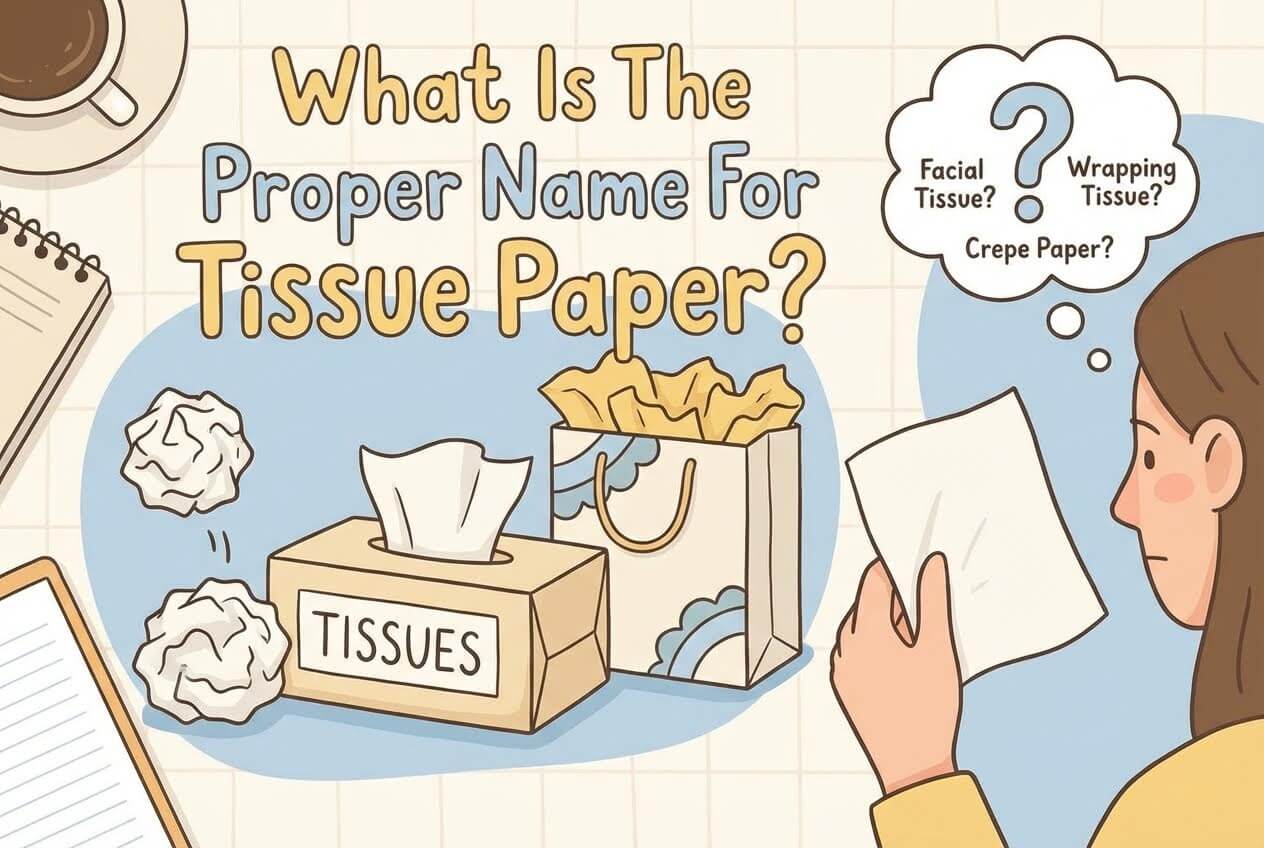
Ever found yourself at the store asking for “Kleenex” when you really meant facial tissue? Or maybe you’ve called gift wrapping “tissue paper,” only to confuse someone who thought you meant bathroom tissue. You’re not alone. The proper names for different tissue products can create confusion in households, retail stores, and even professional packaging circles. This guide clarifies the naming mysteries, explaining what each type of tissue is called, why brand names remain in our vocabulary, and how to refer to these paper products correctly. Whether you’re shopping for your home, ordering supplies in bulk, or simply curious about language, understanding these differences is more important than you might think.
What Exactly Is Tissue Paper?
The term “tissue paper” refers to thin, lightweight paper mainly used for wrapping and packaging. This is the delicate, often colorful tissue paper that protects items in gift boxes or shopping bags. It’s that thin, see-through material that crinkles easily and comes in almost every color. This paper serves a protective and decorative purpose.
Real tissue paper is quite different from other tissue products, even though they share the same name. The confusion comes from various paper products that all include “tissue” in their names. Each one has different uses. Gift wrap tissue paper provides cushioning and looks appealing. Facial tissue serves hygiene needs. This overlap in terminology leads to many mix-ups in daily conversation.
Manufacturers make tissue paper by processing paper pulp into very thin sheets. The resulting material weighs much less than standard printer paper. You can almost see through a single sheet when you hold it up to the light. This lightweight feature makes it ideal for wrapping fragile items without adding bulk to the packaging. Christmas tissue paper and other seasonal types are made in the same way but use festive colors and sometimes include printed patterns.
Why Do People Call Facial Tissue “Kleenex”?
Kleenex represents one of the most successful examples of a brand name becoming synonymous with an entire product category. Kimberly-Clark introduced Kleenex facial tissue in 1924, revolutionizing personal hygiene. The brand’s popularity grew so massive that people began using “Kleenex” as a generic term for any facial tissue, regardless of actual brand.
This phenomenon happens when a popular brand name becomes the generic name consumers use. Think about how people refer to adhesive bandages as “Band-Aids” or cotton swabs as “Q-tips.” Kleenex achieved this level of market dominance through relentless advertising and consumer trust. The softness and quality became the standard against which all facial tissue gets measured.
However, using “Kleenex” to refer to all facial tissue isn’t technically correct. The proper terminology is “facial tissue” or simply “tissue” when context makes the meaning clear. Companies protect their trademark rights by encouraging proper usage. Yet in American culture, the brand name persists in everyday speech. Most people know exactly what you mean when you ask someone to “pass me a Kleenex,” even if the box contains a completely different brand.
What’s The Difference Between Tissue Paper And Facial Tissue?
These two products couldn’t be more different despite the naming similarity. Tissue paper serves decorative and protective purposes in packaging and wrapping. It’s the colored tissue paper you smooth over gifts or scrunch into shopping bags. This material isn’t designed to absorb moisture or touch your face. The paper fibers don’t have the softness or strength needed for personal hygiene use.
Facial tissue, on the other hand, specifically addresses hygiene needs. Manufacturers design it to be absorbent, soft, and strong enough for blowing your nose without falling apart. The tissue can absorb mucus, water, and other liquids without disintegrating. Special processing gives facial tissue its characteristic softness that won’t irritate sensitive skin around the nose and mouth.
The size also differs significantly. A standard facial tissue comes in a compact sheet perfect for one-handed use. Tissue paper used for wrapping comes in much larger sheets, sometimes measuring 20 by 30 inches or bigger. You’d never want to blow your nose on gift wrap tissue paper – it would likely fall apart and provide zero comfort. Similarly, using facial tissue to wrap gifts would be impractical and expensive.
How Do Toilet Paper And Toilet Tissue Fit Into The Picture?
Toilet paper and toilet tissue refer to the same product – the absorbent paper used in the bathroom. Both terms are completely acceptable and commonly used across different regions. Some areas prefer “toilet paper” while others say “toilet tissue,” but they’re describing identical products. The paper combines absorbency with enough strength to handle its intended purpose without clogging plumbing.
This bathroom essential differs from both gift wrap tissue paper and facial tissue in several ways. Toilet paper must dissolve relatively quickly in water to prevent plumbing issues. Manufacturers design it to break down when wet, unlike facial tissue which maintains integrity when damp. The texture balances softness with functionality, though generally it’s less luxurious than premium facial tissue.
Interestingly, some consumers purchase toilet paper based on brand loyalty just like facial tissue. Market research shows distinct preferences for specific brands, textures, and ply counts. The household staple generates billions in annual sales across the USA and worldwide. Yet unlike Kleenex, no single toilet paper brand has become a generic term for the entire category. People still refer to it as “toilet paper” or “toilet tissue” regardless of which brand they purchase.
What About Paper Napkins And Paper Towels?
Paper napkins represent another category often confused with tissue products. A paper napkin serves dining purposes – wiping your mouth during meals or cleaning up minor food spills at the table. The proper name is simply “napkin” or “paper napkin” to distinguish from cloth versions. These napkins are made with different specifications than any type of tissue.
Napkins need durability to handle food, grease, and moisture without immediately falling apart. They’re thicker and more textured than facial tissue. The paper used for napkins also differs from decorative tissue paper. You wouldn’t use a paper napkin to wrap a gift any more than you’d use colored tissue paper at the dinner table. Each product fills a specific niche.
Paper towels occupy yet another space in the tissue product family. These absorbent sheets excel at cleaning tasks, wiping up spills, and handling household chores. Paper towels used for wiping kitchen counters or drying hands need exceptional strength when wet. Manufacturers create them to be more robust than napkins or facial tissue. The proper term remains “paper towels” – another product category that hasn’t been overtaken by a brand name, though “Bounty” comes close in some regions.
Why Does The Proper Naming Actually Matter?
Using correct terminology prevents confusion when shopping or discussing products. Imagine walking into a store and asking for “tissue paper” when you actually need facial tissue. You might end up with decorative wrapping paper instead of something to blow your nose with. The same confusion happens in reverse when event planners need wrapping tissue but accidentally order boxes of Kleenex.
For businesses, especially those in packaging and paper products, precision matters even more. A customer asking to purchase tissue paper in bulk could mean several different things. Are they looking for printed tissue paper for retail packaging? Do they need facial tissue for office bathrooms? Perhaps they want paper towels for their restaurant? Clear communication saves time and prevents costly ordering mistakes.
The consumer benefits from understanding these distinctions too. When shopping online or over the phone, using accurate names gets you exactly what you need. Product descriptions and search results work better when you input the proper terminology. Saying “I need tissue paper” when searching could bring up gift wrap, while “facial tissue” narrows results to the disposable tissues for personal hygiene. Specificity makes everyone’s life easier.
How Do Cultural Differences Affect Tissue Paper Names?
Different cultures and regions use varying terms for the same products. In British English, facial tissue might be called “tissues” while Americans might say “Kleenex” regardless of brand. The term usage shifts based on local market preferences and advertising influence. What’s commonly used in one country might sound unusual in another.
These regional variations extend beyond just facial tissue. Some areas refer to paper towels as “kitchen roll” or “kitchen paper.” Napkins might be “serviettes” in certain English-speaking countries. Even toilet paper goes by different names – “loo roll” in Britain, for instance. Understanding these cultural nuances helps when communicating across borders or dealing with international suppliers.
The popularity of specific brands also varies geographically. While Kleenex dominates in North America, other markets have different leading brands that may or may not have achieved generic status. This creates interesting challenges for global companies trying to maintain consistent messaging. The culture around tissue products reflects broader patterns in language evolution and brand influence.
What Are The Different Types Of Decorative Tissue Paper?
When discussing true tissue paper – the wrapping kind – several distinct categories exist. Colored tissue paper comes in solid hues ranging from pastels to vibrant primaries. Retailers stock endless color options to match any occasion or brand identity. The clean colors work beautifully for gift wrapping and product packaging without any additional decoration.
Printed tissue paper features designs, patterns, or logos printed directly on the sheets. Custom printing allows businesses to incorporate branding into their packaging. Holiday versions like Christmas tissue paper showcase seasonal motifs – snowflakes, ornaments, Santa designs. These printed varieties add visual interest while maintaining the protective function of plain tissue paper used in packaging.
Crepe paper represents a textured variety with a characteristic crinkled surface. The manufacturing process creates permanent wrinkles that give crepe paper its stretchy, elastic quality. This makes it popular for party decorations and craft projects beyond simple wrapping. Despite the name difference, crepe paper still falls under the broader tissue paper category. The unique texture sets it apart from smooth colored tissue paper but doesn’t change its fundamental purpose.
Can Brand Names Ever Become Too Generic?
When a brand name becomes a generic term, companies face a paradox. On one hand, this represents ultimate market success – your brand becomes synonymous with the entire product category. On the other hand, if the name becomes too generic, you risk losing trademark protection. Legal teams work hard to prevent their brand name from becoming the generic term everyone uses.
Kleenex has successfully maintained its trademark while still being widely used as a generic term in casual conversation. The company regularly reminds people that “Kleenex” is a registered trademark for their specific facial tissue products. Proper usage would be “Kleenex brand facial tissue” rather than just “kleenex” as a lowercase common noun. Most consumers ignore these distinctions in everyday speech.
Some brands haven’t been as fortunate. “Aspirin” and “escalator” started as trademarked brand names but became so generic that they lost legal protection. The line between brand success and generic commonality remains delicate. Companies must balance the marketing benefit of widespread name recognition against the legal risk of their trademark becoming unenforceable. This ongoing tension shapes how companies advertise and educate consumers about proper product names.
How Should You Ask For What You Need?
Being specific eliminates confusion. When you need something to blow your nose, ask for “facial tissue” rather than just “tissue.” This distinguishes it from gift wrap tissue paper immediately. If brand doesn’t matter, “facial tissue” works perfectly. If you have a preference, mention it: “Do you have Kleenex or another brand of facial tissue?”
For decorative wrapping needs, say “tissue paper for wrapping” or specify color and size requirements. “I need 20 by 30 inch sheets of red tissue paper” leaves no room for misunderstanding. When ordering for business purposes, include even more detail: “printed tissue paper with our logo” or “Christmas tissue paper in traditional holiday colors.” The extra words prevent expensive mix-ups.
Don’t feel embarrassed about being thorough. Sales associates and customer service representatives appreciate clear communication. They’d rather answer a detailed question than process a return because someone received the wrong product. Using proper terminology demonstrates knowledge and helps everyone complete transactions efficiently. Your specificity benefits both parties in any purchasing situation.
Your Quick Reference Guide To Tissue Product Names
Understanding tissue product terminology doesn’t have to be complicated. Here’s everything you need to know about calling these paper products by their proper names, avoiding confusion, and getting exactly what you need every time you shop or place an order.
- Tissue Paper: The proper name for thin, decorative paper used for wrapping gifts and protecting items in packaging. Not meant for personal hygiene or cleaning. Available in countless colors and patterns.
- Facial Tissue: The correct term for soft, absorbent paper designed for blowing your nose, wiping your face, or catching a sneeze or cough. Kleenex is a popular brand name but not the generic term.
- Toilet Paper/Toilet Tissue: Both terms correctly refer to bathroom tissue. The paper must be absorbent yet able to dissolve in water to prevent plumbing problems.
- Paper Napkins: Disposable napkins used during meals for wiping your mouth and hands. Made differently than facial tissue with more texture and durability to handle food.
- Paper Towels: Absorbent sheets designed for cleaning and wiping up spills. Much stronger when wet compared to facial tissue or napkins.
- Kleenex: A brand name for facial tissue, not a generic term despite widespread usage. Using specific brand names when you mean the generic product can create trademark issues.
- Colored Tissue Paper: Wrapping tissue available in solid colors without patterns. The most versatile option for gift wrapping and packaging across all occasions.
- Printed Tissue Paper: Decorative tissue featuring designs, logos, or seasonal patterns. Popular for business branding and special occasions.
- Crepe Paper: Textured tissue paper with a crinkled surface that provides stretch and visual interest. Often used in crafts and party decorations.
- Christmas Tissue Paper: Seasonal tissue paper featuring holiday colors and winter motifs. A category of printed tissue paper specific to the holiday season.
- Regional Variations: Remember that different areas may use different terms. “Kitchen roll” might mean paper towels in some countries, while “serviettes” could refer to napkins.
- Context Matters: The word “tissue” alone could refer to multiple products. Always add a descriptor – facial, toilet, gift wrap, or specify the intended use to avoid confusion.
- Brand vs. Generic: While brand loyalty is fine, know the difference between asking for a specific brand and using a brand name when you mean the generic product category.
- Professional Settings: In business environments, especially when ordering supplies in bulk, use precise terminology. Ambiguity costs time and money in professional purchasing.
- Shopping Online: Search engines and product catalogs rely on accurate terminology. Using proper names yields better search results and helps you find exactly what you need faster.
The English language is always changing, and tissue product names show this shift. Brand names turn into common words. Regional tastes influence language. New products come with their own names. Knowing the right terms helps you express yourself clearly, whether you’re buying household items, ordering packaging for your business, or just trying to wipe your nose without confusion. The next time someone asks you for a Kleenex, you’ll realize they likely mean facial tissue. You’ll get why that popular brand name is so firmly rooted in our daily language.