
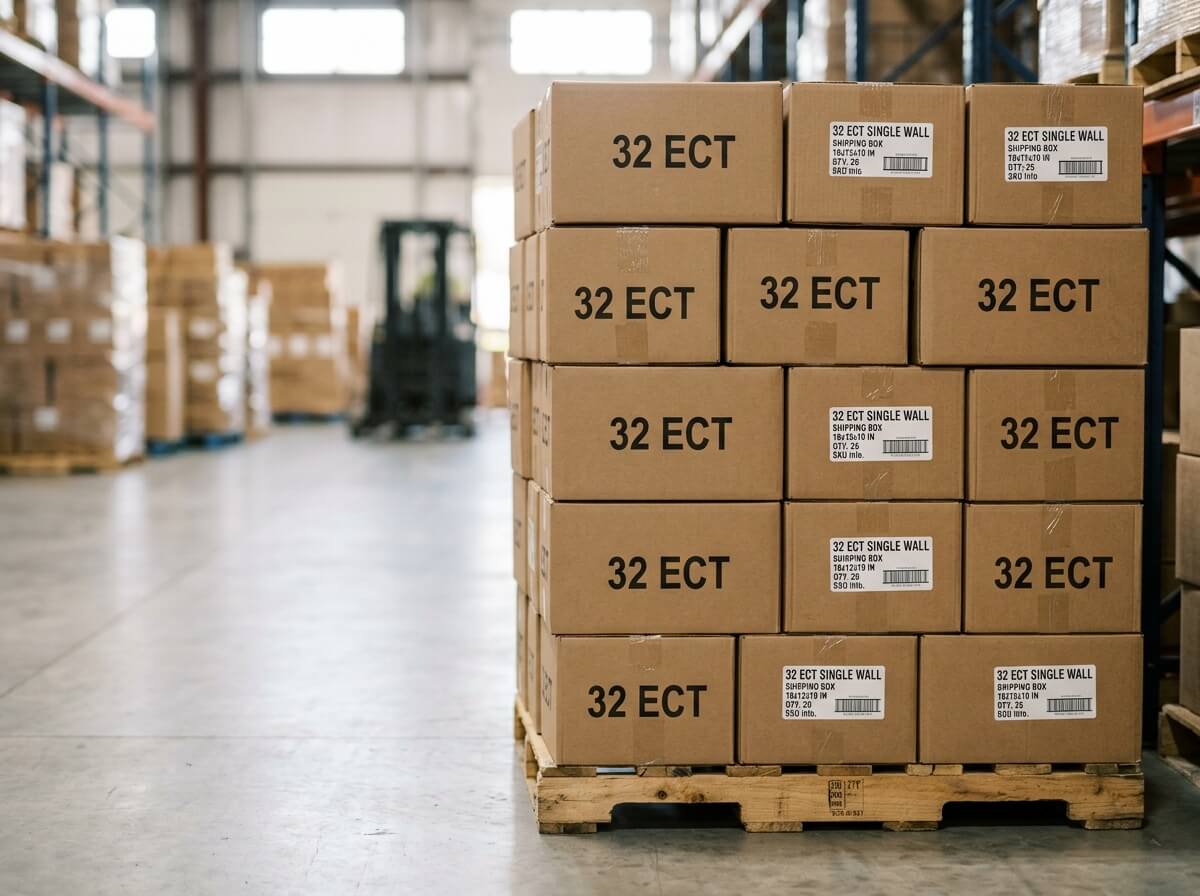
What is a 32 ECT box?
A 32 ECT box is a corrugated shipping box rated using the Edge Crush Test (ECT), which measures how much vertical pressure a box can withstand before collapsing.
- 32 ECT = strong stacking performance
- Designed for standard shipping and storage
- Commonly used for e-commerce packaging
Simple definition:
A 32 ECT box is best for lightweight to medium-weight shipments that will be stacked during storage or transit.
32 ECT vs 200# test boxes
Understanding this difference is where most mistakes happen.
- 32 ECT measures stacking strength
- 200# test measures burst strength from internal pressure
Use 32 ECT for stacking efficiency. Use 200# test for heavier or more fragile shipments.
When should you use a 32 ECT box?
Use a 32 ECT box when your shipment meets these conditions:
- Total weight is under 20 to 30 lbs
- Products are not fragile
- Items do not have sharp edges
- Shipment will be stacked in transit or storage
- Standard parcel or e-commerce order
Common use cases include:
- Clothing and apparel
- Books and paper goods
- Small retail items
- Household products
32 ECT boxes are best for lightweight, non-fragile items in standard shipping environments.
When should you NOT use a 32 ECT box?
Avoid 32 ECT boxes in these situations:
- Items over 30 lbs or with high weight density
- Fragile products such as glass or ceramics
- Long-distance shipments with heavy stacking
- Products with sharp edges that can puncture the box
- Bulky or oversized shipments
Do not use 32 ECT boxes for heavy, fragile, or high-risk shipments.
What is the weight limit for a 32 ECT box?
Most 32 ECT boxes are designed for:
- Ideal range: up to 30 lbs
- Maximum range: up to 40 lbs depending on packing quality
Exceeding this limit increases the risk of box failure during transit.
How to pack a 32 ECT box correctly
Proper packing is critical to performance.
1. Fill empty space
Use void fill materials such as:
This prevents movement and reduces damage.
2. Distribute weight evenly
Avoid placing all weight on one side. Even distribution prevents bending and collapse.
3. Seal using the H-method
Apply tape across:
- Center seam
- Both edges
Use strong tape such as pressure-sensitive or water-activated tape.
Common mistakes to avoid
These mistakes are the main cause of damaged shipments:
- Overloading the box beyond 30 to 40 lbs
- Poor weight distribution inside the box
- Not using internal cushioning
- Leaving empty space inside the box
- Weak sealing or low-quality tape
Most box failures happen due to overloading, poor packing, or weak sealing.
How to choose the right box
Use this quick guide:
- Choose 32 ECT for lightweight, low-risk items
- Choose 200# test for heavy, fragile, or sharp-edged products
Examples:
- Clothing → 32 ECT
- Books → 32 ECT
- Glassware → 200#
- Tools → 200#
- Electronics → 200#
Why are businesses switching to 32 ECT boxes?
Businesses are shifting to 32 ECT boxes because they offer the best balance between cost, performance, and shipping efficiency for modern e-commerce.
1. Lower packaging costs without sacrificing performance
Most businesses were over-spec’ing their packaging.
32 ECT boxes use less material than heavier test boxes, which reduces cost per unit. For most shipments under 30 lbs, they provide sufficient strength without overpaying for unnecessary durability.
2. Optimized for e-commerce shipping
The majority of e-commerce orders fall into lightweight to medium-weight categories. 32 ECT boxes are designed specifically for:
- Parcel shipping environments
- Standard carrier handling
- Moderate stacking during transit
They match how products are actually shipped today, not how they were shipped 20 years ago.
3. Better stacking efficiency in warehouses and transit
Because 32 ECT measures edge crush strength, these boxes perform well when stacked.
This matters for:
- Palletization
- Warehouse storage
- Truckload efficiency
Stronger stacking = fewer crushed boxes and better space utilization.
4. Reduced dimensional weight and shipping costs
Lighter packaging can help reduce overall shipment weight, which directly impacts carrier costs.
For high-volume shippers, even small weight reductions create meaningful savings over time.
5. Sustainability and material reduction
Using the right-strength box instead of an overbuilt one reduces corrugated usage.
That leads to:
- Less material waste
- Lower environmental impact
- More efficient supply chains
Many businesses are making this shift as part of broader sustainability goals.
6. Smarter packaging strategy driven by data
More companies are analyzing damage rates, shipping costs, and product mix.
What they are finding:
- Heavier boxes are often unnecessary
- Proper packing matters more than box strength
- Right-sizing packaging improves margins
32 ECT fits into a more data-driven packaging strategy.
32 ECT boxes vs 200# Box
| Metric | 32 ECT Box | 200# Test Box | What It Means |
| Material weight | Lighter | Heavier | More paper = higher cost |
| Cost per unit | Lower | Higher | Typically 5–15% cheaper |
| Shipping cost impact | Lower | Higher | Impacts freight at scale |
| Strength type | Stacking (ECT) | Burst (Mullen) | Different performance, not just “stronger” |
| Best use case | <30 lbs, non-fragile | Heavy, fragile, sharp items | Right-sizing matters |
Stop Overpaying for Packaging
Businesses are not switching to 32 ECT boxes because they are cheaper.
They are switching because they are right-sized for how products are actually shipped today.
Switch to the right box and reduce your packaging costs without increasing damage.
Shop 32 ECT boxes now and find the right size for your shipments.